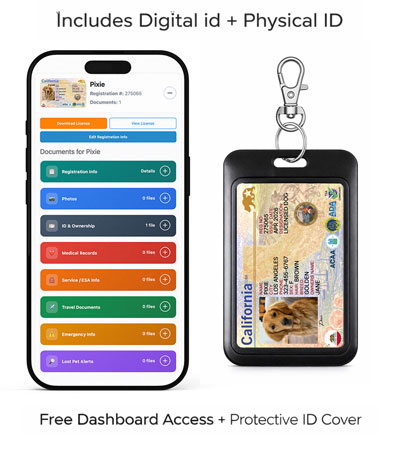
Adams County Dog Registration Information
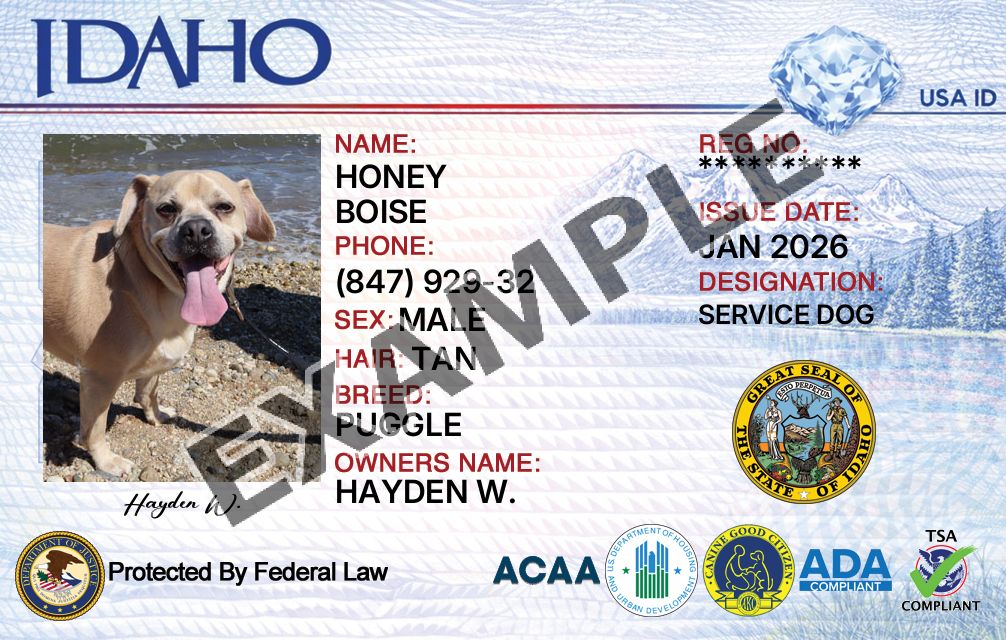
Service Dogs and Emotional Support Animals in Adams, Idaho
If you’re asking where do I register my dog in Adams County, Idaho for my service dog or emotional support dog, the key thing to know is that dog registration (licensing) and service/ESA status are not the same process. In most of Idaho—including Adams County—dog licensing is handled locally by a city office (if you live inside city limits) or by county-level offices/animal control enforcement (if you live outside city limits). This page helps you identify where to register a dog in Adams County, Idaho, what paperwork is commonly required, and how licensing relates (and does not relate) to service dog or emotional support animal status.
Because rules can differ depending on whether you live in the City of Council, the City of New Meadows, or in the unincorporated parts of the county, start by confirming your address location (inside or outside city limits), then contact the appropriate office below.
Where to Register or License Your Dog in Adams County, Idaho
Licensing is commonly handled at the city level for residents inside city limits and may be handled through county offices for unincorporated areas. Below are example official offices serving residents in Adams County, Idaho. If you are unsure which office applies to your address, start with the Adams County Courthouse (County Clerk) and ask where local dog licensing or animal control dog license Adams County, Idaho questions should be directed.
Official offices (examples within Adams County)
| Office | Address | Phone | Hours | |
|---|---|---|---|---|
| City of Council (City Hall / City Offices) |
501 N Galena Street Council, ID 83612 |
208-253-4201 | Not listed | Mon–Thu, 8:00 am – 5:00 pm |
| Adams County Courthouse (County Clerk access / general county services) |
201 Industrial Avenue Council, ID 83612 |
208-253-4561 | Not listed | Not listed |
| Adams County Sheriff’s Office (records request form lists office location) |
201 Industrial Ave. Council, ID 83612 |
Not listed | Not listed | Not listed |
| City of New Meadows (City Hall receives dog licensing documentation) | Not listed | Not listed | Not listed | Not listed |
| City of Idaho City (City Clerk – dog license form available; useful if you need an example of a city-run license process) |
PO Box 130 Idaho City, ID 83631 |
208-392-4584 | [email protected] (City Clerk – Treasurer) | Not listed |
How to choose the right office
- If you live inside Council city limits: Start with City of Council (city clerk/city hall). This is often the most direct answer to “where to register a dog in Adams County, Idaho” for Council residents.
- If you live inside New Meadows city limits: Start with New Meadows City Hall for licensing steps and current fees.
- If you live outside city limits (unincorporated Adams County): Start with the Adams County Courthouse (County Clerk) to confirm what county-level requirements apply and which office handles enforcement or documentation for your area.
Overview of Dog Licensing in Adams County, Idaho
What “dog registration” usually means
In everyday terms, “registering” your dog usually refers to obtaining a local license/tag from a city or county office. A local license typically serves several practical purposes: it links your dog to you as the owner, supports animal control operations, and provides a quick way to identify your dog if it’s found roaming or becomes separated from you.
Local control: city vs. county
In Adams County, Idaho, the most important detail is that most licensing is handled locally. That means your “dog license in Adams County, Idaho” may be issued by a city office (such as Council or New Meadows) if you reside inside city limits. If you live in an unincorporated area, the county may play a larger role in enforcement or guidance, and you may need to confirm which office administers licensing requirements (if any) for your exact location.
Rabies vaccination requirements (why they matter for licensing)
Many Idaho jurisdictions require current rabies vaccination proof as a condition of licensing. Even where the details vary by locality, rabies rules are commonly tied to public health response when a bite or exposure occurs. When you contact your local office about an animal control dog license Adams County, Idaho, ask what documentation is required and whether a rabies certificate or veterinarian record must be presented to obtain or renew the license.
How Dog Licensing Works Locally in Adams County, Idaho
Step 1: Confirm whether you are in city limits
Licensing rules often change at city boundaries. If your mailing address is “Council” or “New Meadows,” you still may or may not be inside city limits. If you are not sure, call the city office or the county courthouse and ask whether your physical address is inside the city and where you should apply for a license.
Step 2: Gather typical documents
Local offices commonly ask for proof of rabies vaccination and basic owner identification. Some communities may also ask about spay/neuter status for fee purposes. For example, New Meadows notes that City Hall issues the license after receiving proof of payment, proof of rabies vaccination, and (if required) proof of spay/neuter.
Step 3: Apply and keep the tag with your dog
After you apply and pay the licensing fee (if required), you typically receive a tag or license record. Keeping the tag attached to a collar is one of the simplest ways to show compliance and help your dog get returned quickly if found.
If you’re registering a service dog or ESA
If your dog is a service dog or emotional support animal, you may still need a standard local license depending on where you live. Your local licensing office can explain whether any fee waivers or special documentation exists locally, but keep in mind that service dog “registration” is not a government licensing program in the same way a city dog license is. In other words: you may be asking one question (“where do I register my dog?”) but there are two separate topics—local licensing and service/ESA status.
Service Dog Laws in Adams County, Idaho
Service dog definition (what actually makes a service dog)
A service dog is generally defined by individual training to perform specific tasks for a person with a disability (for example: guiding, alerting to seizures, interrupting panic attacks, retrieving items, or providing balance assistance). A service dog’s legal status comes from function and training, not from a purchased ID card, vest, or online registration.
Public access vs. local licensing
Public access rules address where a trained service dog may accompany its handler (such as many public-facing businesses and government buildings). Local licensing addresses whether your dog must be registered with a city/county and comply with health requirements like rabies vaccination proof. These are separate systems. Even if your dog is a service dog, you may still need a dog license in Adams County, Idaho if your local jurisdiction requires licensing for dogs.
What businesses may ask (practical overview)
In most situations, a business may ask limited questions to confirm a service animal’s role (commonly: whether the dog is required because of a disability and what work/tasks the dog has been trained to perform). They generally should not require you to present “registration papers.” If your goal is compliance, focus on: (1) local licensing requirements for your address, and (2) ensuring your dog meets the definition of a trained service dog for public access.
Emotional Support Animal Rules in Adams County, Idaho
An ESA is not the same as a service dog
An emotional support animal (ESA) provides comfort by its presence, but it is not trained to perform specific tasks in the same way a service dog is. Because of that difference, ESAs generally do not have the same public-access rights as service dogs.
What ESA status usually impacts (housing vs. public places)
ESA documentation most often comes up in housing contexts. Rules can depend on the type of housing and which laws apply. Regardless of ESA status, local rules like vaccination and nuisance/at-large ordinances can still apply. If you’re wondering where to register a dog in Adams County, Idaho for an ESA, the answer is typically: you register the dog the same way you would any other dog—through your local city or county licensing process—because ESA status is separate from licensing.
Avoid third-party “ESA registries” for licensing purposes
If you’re trying to meet local licensing requirements, city/county offices typically want local documentation (application, fees) and health records (often rabies proof). Third-party registry certificates generally do not replace a local license and do not convert a pet into a service dog.
Frequently Asked Questions
Register A Dog In Other Idaho Counties
Select your county below to get started with your dog’s ID card. Requirements and license designs may vary by county, so choose your location to see the correct options and complete your pup’s registration.
- Ada County Dog Registration
- Bannock County Dog Registration
- Bear Lake County Dog Registration
- Benewah County Dog Registration
- Bingham County Dog Registration
- Blaine County Dog Registration
- Bonner County Dog Registration
- Bonneville County Dog Registration
- Boundary County Dog Registration
- Butte County Dog Registration
- Camas County Dog Registration
- Canyon County Dog Registration
- Caribou County Dog Registration
- Cassia County Dog Registration
- Clark County Dog Registration
- Clearwater County Dog Registration
- Custer County Dog Registration
- Elmore County Dog Registration
- Franklin County Dog Registration
- Fremont County Dog Registration
- Gem County Dog Registration
- Gooding County Dog Registration
- Idaho County Dog Registration
- Jefferson County Dog Registration
- Jerome County Dog Registration
- Kootenai County Dog Registration
- Latah County Dog Registration
- Lemhi County Dog Registration
- Lewis County Dog Registration
- Lincoln County Dog Registration
- Madison County Dog Registration
- Minidoka County Dog Registration
- Nez Perce County Dog Registration
- Oneida County Dog Registration
- Owyhee County Dog Registration
- Payette County Dog Registration
- Power County Dog Registration
- Shoshone County Dog Registration
- Teton County Dog Registration
- Twin Falls County Dog Registration
- Valley County Dog Registration
- Washington County Dog Registration